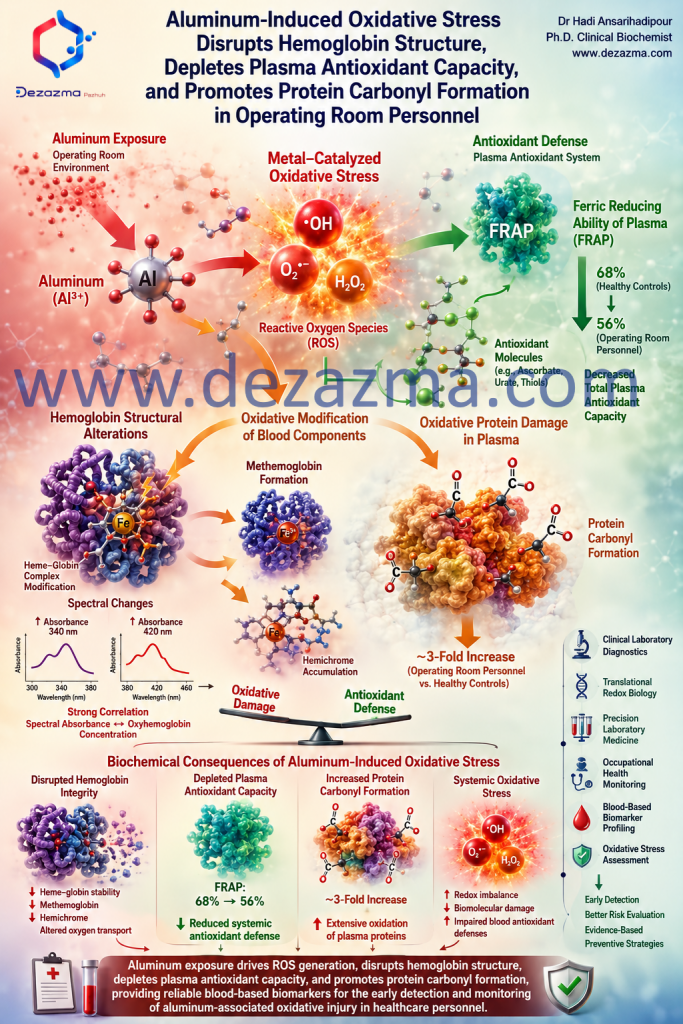
Occupational exposure to aluminum represents a significant source of aluminum-induced oxidative stress, where disruption of redox homeostasis accelerates oxidative injury to circulating blood components and compromises systemic antioxidant defense. Evaluation of blood samples obtained from hospital operating room personnel demonstrated that aluminum-mediated metal-catalyzed oxidation profoundly altered the biochemical balance between oxidants and antioxidants. Ferric reducing ability of plasma (FRAP) provided a robust measure of total plasma antioxidant capacity, while determination of protein carbonyl content served as a sensitive indicator of oxidative protein damage and plasma protein oxidation. Simultaneously, hemoglobin spectral analysis identified progressive hemoglobin structural alterations through significant changes in absorbance at 340 nm and 420 nm, reflecting modification of the heme–globin complex during oxidative stress. Strong correlations between spectral absorbance and oxyhemoglobin concentration confirmed deterioration of hemoglobin integrity, accompanied by enhanced methemoglobin formation and hemichrome accumulation, both recognized biomarkers of hemoglobin oxidation. The decline in plasma antioxidant capacity, decreasing from 68% in healthy controls to 56% in operating room personnel, coincided with an approximately threefold increase in protein carbonyl formation, demonstrating extensive oxidation of plasma proteins under aluminum-induced redox imbalance. These interconnected biochemical events establish a mechanistic relationship between reactive oxygen species, metal-induced oxidative damage, oxidative stress biomarkers, and progressive impairment of blood antioxidant defenses. Integration of clinical biochemistry, spectrophotometric hemoglobin analysis, protein oxidation biomarkers, and occupational exposure assessment provides a comprehensive strategy for evaluating early biochemical consequences of aluminum toxicity. The observed molecular alterations support the implementation of clinical laboratory diagnostics, translational redox biology, precision laboratory medicine, occupational health monitoring, blood-based biomarker profiling, and oxidative stress assessment as reliable approaches for detecting aluminum-associated oxidative injury, improving risk evaluation, and strengthening evidence-based preventive strategies for healthcare personnel chronically exposed to oxidative environmental hazards.
Reference:
Ansari Hadipour H, Molaei Nezamabadi A. Evaluating the aluminum induced oxidative stress in erythrocyte and plasma of operating room personnel. Arak Medical University Journal. 2014; 17(3): 1-9n