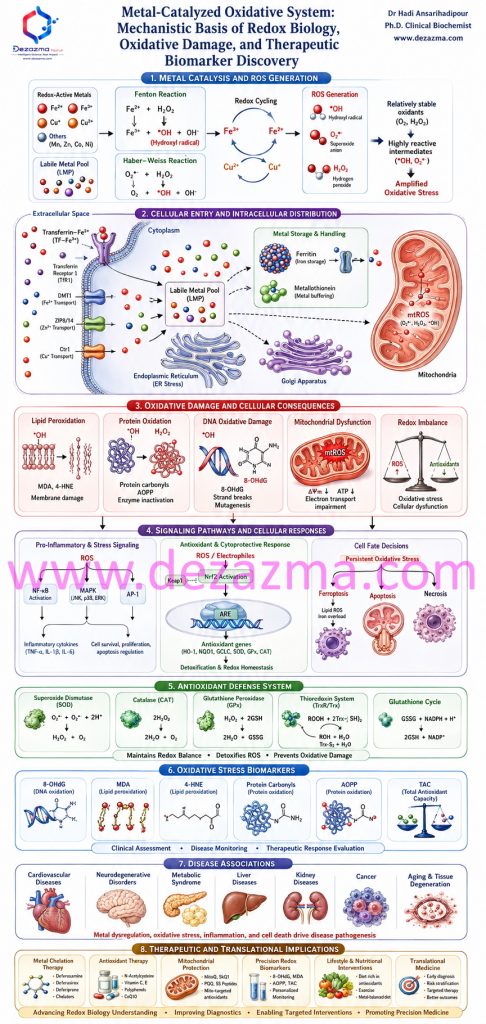
Metal-catalyzed oxidative systems represent central drivers of metal-catalyzed oxidative stress and core regulators of redox biology and disease mechanisms. In particular, iron and copper act as catalytic centers. They promote the Fenton reaction and Haber–Weiss reaction. Consequently, hydroxyl radicals are generated which are reactive oxygen species (ROS) and disrupts cellular redox homeostasis. Furthermore, oxidative injury extends across biological macromolecules, including DNA oxidation, protein oxidation, lipid peroxidation, and carbohydrate oxidation pathways. In parallel, mitochondrial injury amplifies ROS formation, thereby reinforcing mitochondrial dysfunction and oxidative stress amplification loops. Subsequently, key signaling networks are activated, including NF-κB signaling, Nrf2 signaling, and MAPK signaling pathways, which together define oxidative stress signaling and inflammatory transcriptional reprogramming. Moreover, these cascades regulate apoptosis, autophagy, ferroptosis, and cellular senescence, thereby shaping cell death and survival signaling in redox imbalance. Over time, sustained dysregulation contributes to genome instability, telomere shortening mechanisms, and epigenetic reprogramming under oxidative stress. Therefore, these processes are strongly associated with cardiovascular disease, atherosclerosis, heart failure, ischemic stroke, Alzheimer’s disease, Parkinson’s disease, diabetes mellitus, chronic kidney disease, nonalcoholic fatty liver disease (NAFLD), liver fibrosis, chronic obstructive pulmonary disease (COPD), cancer progression, and age-related degenerative disorders. In contrast, physiological defense depends on the antioxidant defense system in redox homeostasis, including glutathione, superoxide dismutase, catalase, glutathione peroxidase, thioredoxin, and peroxiredoxins, although persistent oxidative burden leads to system exhaustion. Consequently, clinically relevant oxidative stress biomarkers in disease diagnostics increase, including 8-hydroxy-2′-deoxyguanosine (8-OHdG), protein carbonyl content, advanced oxidation protein products (AOPP), malondialdehyde (MDA), F2-isoprostanes, oxidized glutathione (GSSG), and total antioxidant capacity (TAC). Finally, integration of redox biomarker profiling, metal metabolism analysis, proteomics-based redox mapping, metabolomics of oxidative stress, liquid biopsy technologies, precision medicine in oxidative stress, and therapeutic biomarker discovery platforms improves diagnosis, prognosis, and treatment monitoring, while enabling targeted antioxidant, metal-chelating, and mitochondria-directed interventions in modern translational redox medicine and systems pathology.