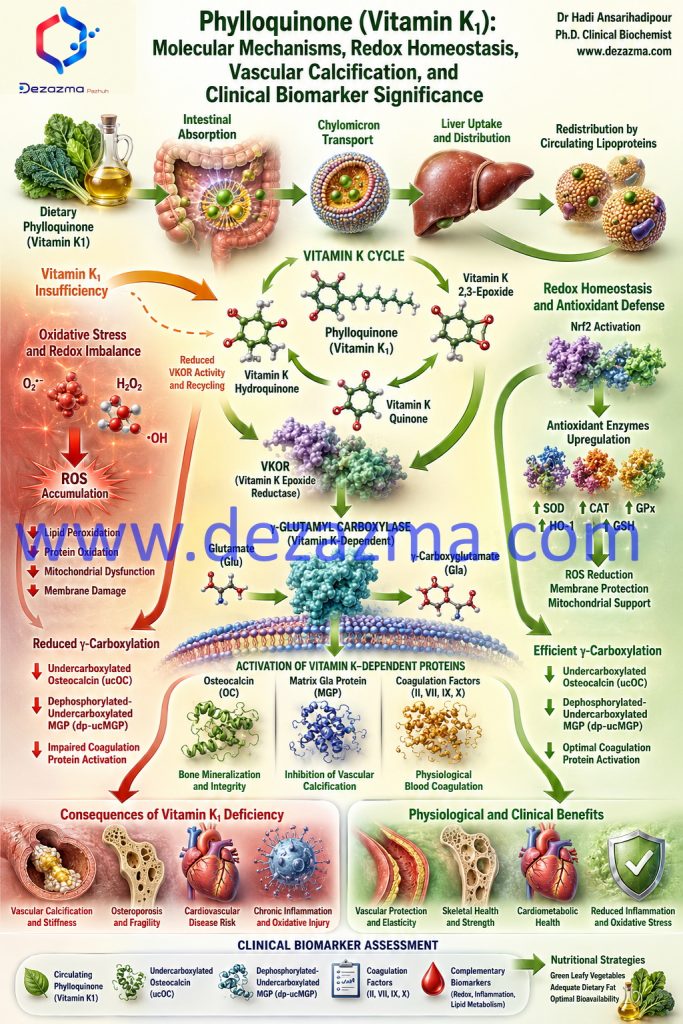
Phylloquinone, the primary dietary form of Vitamin K1, is an essential fat-soluble micronutrient that serves as the indispensable cofactor for γ-glutamyl carboxylase, enabling the Vitamin K cycle and the post-translational activation of multiple Vitamin K-dependent proteins through γ-carboxylation of glutamate residues. Adequate phylloquinone metabolism ensures the biological activity of osteocalcin, matrix Gla protein (MGP), coagulation factors, and additional regulatory proteins that coordinate bone mineralization, vascular calcification inhibition, and physiological blood coagulation. Following intestinal absorption, phylloquinone is incorporated into chylomicrons, transported to the liver, redistributed by circulating lipoproteins, and recycled through vitamin K epoxide reductase (VKOR) to maintain sustained enzymatic activity despite limited tissue reserves. Beyond its classical hemostatic function, emerging evidence identifies phylloquinone as an important regulator of redox homeostasis, oxidative stress, mitochondrial function, and cell signaling, contributing to cellular resilience by limiting reactive oxygen species (ROS) accumulation and preserving membrane integrity during oxidative injury. Insufficient Vitamin K1 deficiency reduces γ-carboxylation efficiency, resulting in elevated inactive osteocalcin and undercarboxylated MGP, thereby accelerating vascular stiffness, ectopic mineral deposition, impaired skeletal integrity, and increased susceptibility to osteoporosis, cardiovascular disease, and chronic inflammatory disorders. Clinical assessment increasingly incorporates circulating phylloquinone, undercarboxylated osteocalcin, dephosphorylated-uncarboxylated MGP, and complementary biomarkers to evaluate nutritional status and cardiometabolic risk. Nutritional strategies emphasizing green leafy vegetables and optimized dietary fat intake enhance phylloquinone bioavailability, supporting physiological carboxylation reactions and systemic metabolic health. Current biomedical research further explores interactions between Vitamin K metabolism, inflammation, endothelial dysfunction, bone remodeling, lipid metabolism, mitochondrial bioenergetics, cellular antioxidant defense, and precision nutrition, positioning phylloquinone as a central molecular determinant of skeletal preservation, vascular protection, metabolic regulation, and translational preventive medicine with expanding significance in modern clinical practice and evidence-based nutritional therapeutics.