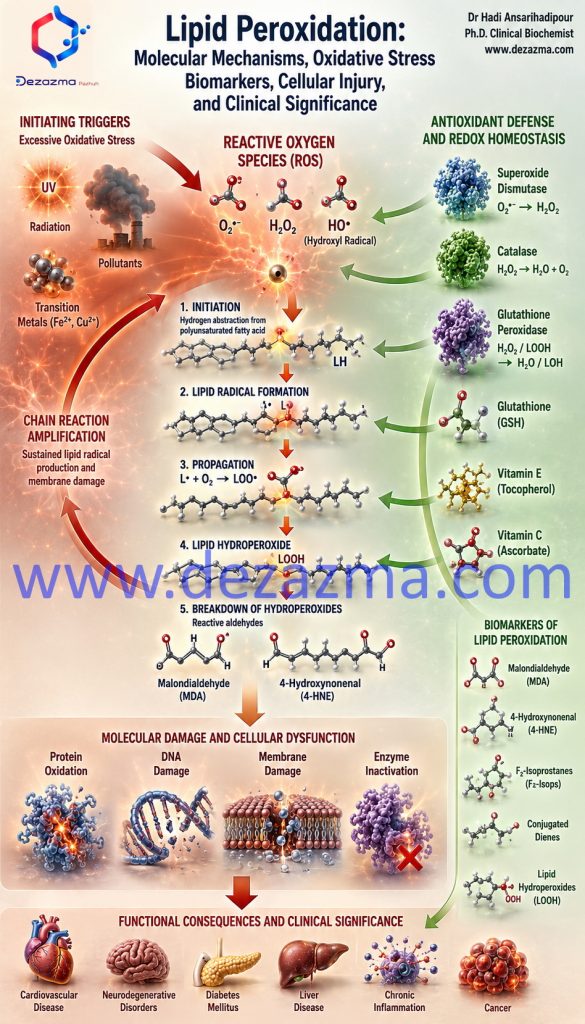
Lipid peroxidation represents a central biochemical mechanism underlying oxidative stress, characterized by the free radical-mediated oxidation of polyunsaturated fatty acids within biological membranes, ultimately compromising membrane architecture, cellular homeostasis, and tissue function. The process is initiated when excessive reactive oxygen species (ROS), particularly the hydroxyl radical, abstract hydrogen atoms from membrane phospholipids to generate lipid radicals, which rapidly interact with molecular oxygen to form lipid peroxyl radicals and lipid hydroperoxides, thereby propagating an autocatalytic chain reaction that amplifies oxidative injury. Decomposition of lipid hydroperoxides produces highly reactive electrophilic aldehydes, including malondialdehyde (MDA) and 4-hydroxynonenal (4-HNE), which induce protein oxidation, DNA damage, phospholipid modification, enzyme inactivation, and altered cell signaling, contributing to persistent molecular dysfunction. Maintenance of redox homeostasis depends on integrated antioxidant defense systems involving glutathione, glutathione peroxidase, superoxide dismutase, catalase, vitamin E, and vitamin C, which limit reactive intermediate accumulation, preserve membrane integrity, and sustain mitochondrial function and cellular bioenergetics. When antioxidant capacity is overwhelmed, progressive lipid peroxidation promotes mitochondrial dysfunction, increased membrane permeability, inflammatory activation, dysregulated signal transduction, and ferroptosis, thereby accelerating cellular degeneration and organ dysfunction. Quantitative assessment of oxidative stress biomarkers, including MDA, 4-HNE, F2-isoprostanes, conjugated dienes, and lipid hydroperoxides, provides robust indicators of oxidative damage, disease severity, therapeutic response, and clinical prognosis. Accumulating biomedical evidence identifies excessive lipid peroxidation as a pivotal contributor to cardiovascular disease, atherosclerosis, neurodegenerative diseases, diabetes mellitus, metabolic syndrome, chronic inflammation, liver disease, and cancer, supporting its value as both a mechanistic pathway and a translational biomarker. Consequently, interventions that enhance endogenous antioxidant systems, suppress free radical propagation, optimize mitochondrial bioenergetics, and restore physiological redox regulation remain essential strategies for reducing oxidative membrane injury, improving metabolic resilience, and advancing precision medicine, making lipid peroxidation a highly significant target in contemporary biomedical research and clinical biomarker development.