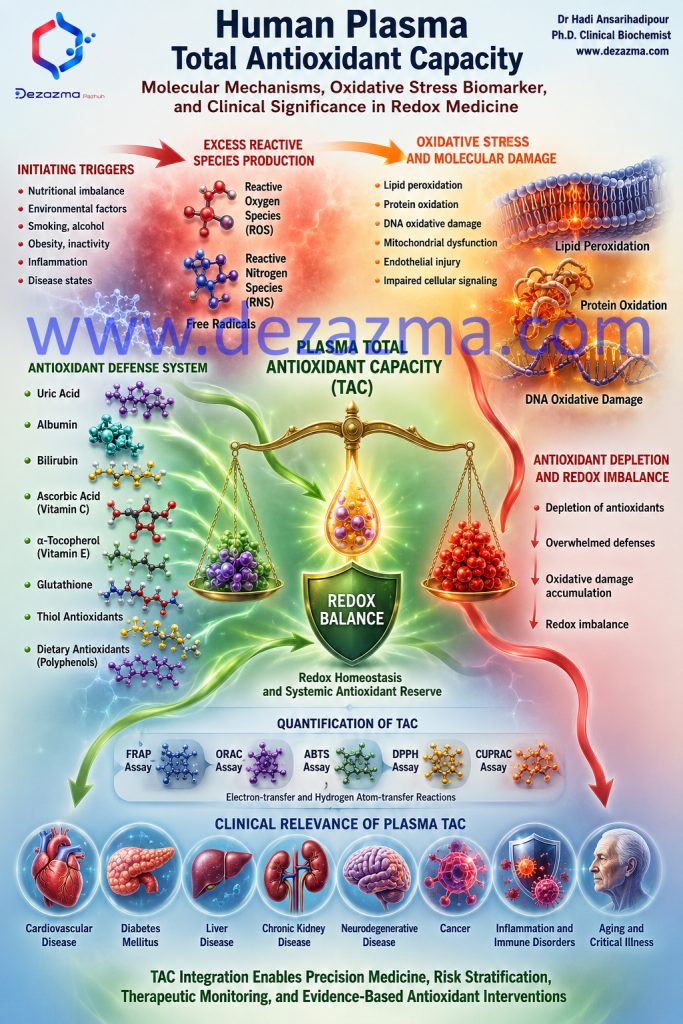
Human plasma total antioxidant capacity (TAC) represents the integrated cumulative ability of circulating enzymatic and nonenzymatic antioxidants to neutralize reactive oxygen and nitrogen species, thereby reflecting the overall human plasma total antioxidant capacity of extracellular redox defense rather than the concentration of individual antioxidants alone. As a comprehensive oxidative stress biomarker, TAC incorporates the collective activity of uric acid, albumin, bilirubin, ascorbic acid, vitamin C, α-tocopherol, vitamin E, glutathione, thiol antioxidants, and numerous dietary antioxidants, providing an integrated measure of redox homeostasis and systemic antioxidant reserve. During excessive reactive oxygen species, reactive nitrogen species, and free radical production, antioxidant defenses become depleted, promoting oxidative stress, lipid peroxidation, protein oxidation, DNA oxidative damage, mitochondrial dysfunction, endothelial injury, chronic inflammation, and impaired cellular signaling. Consequently, plasma TAC serves as a valuable indicator of systemic oxidative stress, facilitating evaluation of antioxidant status in cardiovascular disease, diabetes mellitus, metabolic syndrome, neurodegenerative disease, chronic kidney disease, liver disease, cancer, autoimmune disorders, aging, infectious diseases, and critical illness. Quantification commonly employs standardized FRAP assay, ORAC assay, ABTS assay, DPPH assay, and CUPRAC assay, each measuring distinct electron-transfer or hydrogen atom-transfer reactions that collectively characterize plasma antioxidant potential while exhibiting methodological differences requiring careful interpretation and assay harmonization. Moreover, plasma TAC is influenced by nutritional status, dietary polyphenols, micronutrient intake, physical activity, smoking, alcohol consumption, obesity, medication use, renal function, hepatic metabolism, circadian variation, and acute inflammatory responses, emphasizing the importance of standardized preanalytical conditions. Integration of clinical biomarkers, redox biomarkers, antioxidant defense system, oxidative damage, redox balance, precision medicine, and longitudinal TAC assessment provides mechanistic insight into disease progression, therapeutic efficacy, and individualized risk stratification, establishing plasma total antioxidant capacity as an essential translational biomarker linking molecular redox biology with clinical diagnostics, preventive medicine, nutritional interventions, and evidence-based monitoring of systemic antioxidant competence.