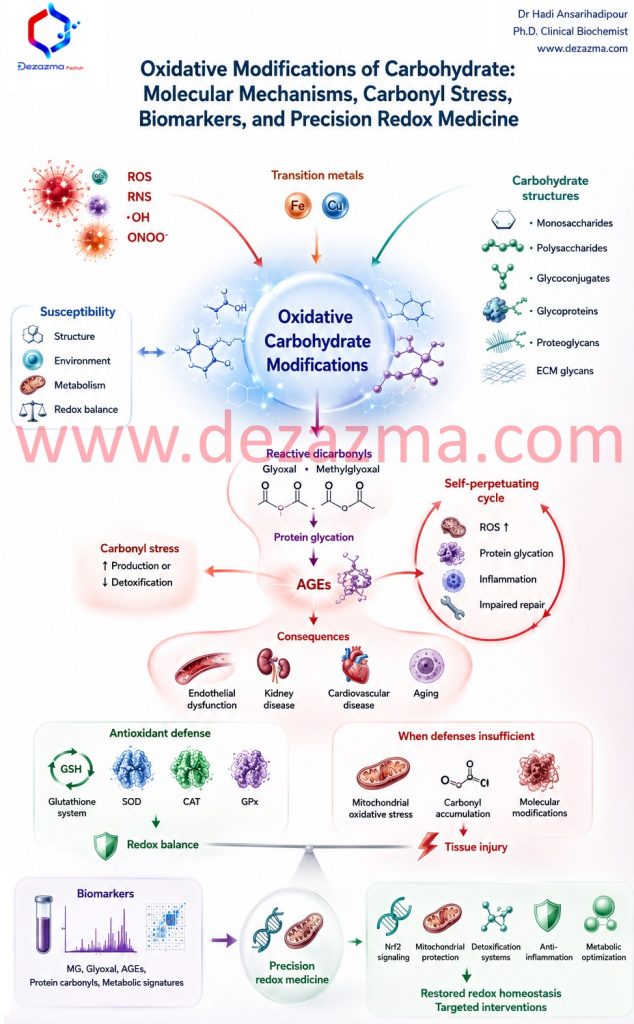
Oxidative carbohydrate modifications represent an emerging component of oxidative stress biology and redox regulation that has received less attention compared with lipid oxidation and protein oxidation. Nevertheless, carbohydrate oxidation contributes to redox imbalance, metabolic dysfunction, inflammation, and chronic disease progression. Carbohydrate-containing molecules are essential regulators of cellular communication, extracellular matrix organization, glycoprotein function, and tissue homeostasis. Therefore, oxidative alterations of carbohydrate structures may influence disease mechanisms not only through molecular damage but also by disrupting biological signaling and structural integrity (10–12). The initiation of carbohydrate oxidation involves highly reactive species, including reactive oxygen species (ROS), reactive nitrogen species (RNS), hydroxyl radicals, and peroxynitrite. Transition metal-mediated reactions involving redox-active metals such as iron and copper can further accelerate oxidative carbohydrate degradation by generating additional reactive intermediates. These processes affect diverse carbohydrate-containing structures, including monosaccharides, polysaccharides, glycoconjugates, glycoproteins, proteoglycans, and extracellular matrix glycans. The susceptibility of carbohydrates to oxidative modification depends on molecular structure, cellular environment, tissue-specific metabolism, and the balance between oxidant generation and antioxidant defense mechanisms (10–12). A major consequence of oxidative carbohydrate degradation is the generation of highly reactive dicarbonyl compounds, particularly glyoxal and methylglyoxal. These reactive carbonyl species readily react with proteins, lipids, and nucleic acids, promoting non-enzymatic glycation and the formation of advanced glycation end products (AGEs). Excessive accumulation of AGEs represents a central feature of carbonyl stress, a pathological condition characterized by increased production or impaired detoxification of reactive carbonyl metabolites. AGE modification alters macromolecular structure, affects molecular interactions, and contributes to impaired cellular function, tissue damage, and biological aging (1–3). The interaction between oxidative stress, carbonyl stress, and AGE accumulation is particularly important in diabetes mellitus and diabetic complications. Chronic hyperglycemia increases mitochondrial ROS production, enhances glycolytic intermediate accumulation, and promotes methylglyoxal formation. This creates a self-perpetuating cycle involving oxidative injury, protein glycation, inflammation, and impaired cellular repair mechanisms. AGE accumulation activates receptor for advanced glycation end products (RAGE) signaling, promoting inflammatory responses, endothelial dysfunction, vascular remodeling, and tissue injury. These mechanisms contribute to diabetic vascular complications, chronic kidney disease, cardiovascular disease, and other metabolic disorders (1,4,7–9). Oxidative carbohydrate damage also affects extracellular structures that maintain tissue organization and intercellular communication. Modification of glycoproteins, proteoglycans, and extracellular matrix glycans can disrupt matrix architecture and remodeling processes. The endothelial glycocalyx, a carbohydrate-rich protective layer on the vascular surface, is particularly vulnerable to oxidative and glycation-mediated injury. Loss of glycocalyx integrity contributes to increased vascular permeability, impaired endothelial function, inflammatory activation, and abnormal vascular homeostasis (6,8). The progression of oxidative carbohydrate injury is strongly influenced by cellular antioxidant capacity. The glutathione antioxidant system, together with superoxide dismutase (SOD), catalase (CAT), and glutathione peroxidase (GPx), maintains intracellular redox balance and limits accumulation of reactive metabolites. When antioxidant defenses become insufficient, persistent redox dysregulation, mitochondrial oxidative stress, and carbonyl-derived molecular modifications develop, further amplifying tissue injury (10–12). Recent advances in clinical biochemistry, metabolomics, and redox biomarker profiling have expanded approaches for evaluating carbohydrate-related oxidative damage. Measurement of methylglyoxal, glyoxal-derived products, AGE biomarkers, protein carbonyls, and metabolic signatures may improve understanding of disease mechanisms and support diagnostic, prognostic, and therapeutic monitoring strategies (1–3,7).Emerging concepts in precision redox medicine aim to restore redox homeostasis through modulation of antioxidant pathways, including Nrf2 signaling, mitochondrial protection, carbonyl detoxification systems, anti-inflammatory interventions, and metabolic optimization. A deeper understanding of oxidative carbohydrate modifications and their relationship with carbonyl stress provides new opportunities for biomarker discovery and targeted therapeutic approaches in oxidative stress-associated diseases (11,12).
References:
1. Schalkwijk CG, Stehouwer CDA. Methylglyoxal, a highly reactive dicarbonyl compound, in diabetes, its vascular complications and other age-related diseases. Physiol Rev. 2020;100(1):407-461.
4. Kalousová M, Hodková M, Kazderová M, et al. Advanced glycation end products and their receptor in chronic kidney disease and diabetes-related complications. Kidney Blood Press Res. 2021;46.
5. Gkogkolou P, Böhm M. Advanced glycation end products: key regulators of tissue aging and inflammation. Dermatoendocrinol. 2021;13.
6. Yuan D, Wang Y, Chen Y, et al. Advanced glycation end products and oxidative stress in metabolic diseases: molecular mechanisms and therapeutic perspectives. Antioxidants (Basel). 2022;11.
7. Piarulli F, Sartore G, Lapolla A. Glyco-oxidation and diabetes complications: the role of advanced glycation end products and oxidative stress. Nutrients. 2022;14.
8. Ceriello A, Prattichizzo F. Variability of glucose levels and oxidative stress: implications for diabetes complications. Diabetes Care. 2021;44.
9. Liguori I, Russo G, Curcio F, et al. Oxidative stress, aging, and diseases. Clin Interv Aging. 2020;15:757-772. 12. Sies H, Mailloux RJ, Jakob U. Fundamentals of redox regulation in biology. Nat Rev Mol Cell Biol. 2024;25:701-719. 13. Li B, Ming H, Qin S, Nice EC, Dong J, Du Z, et al. Redox regulation: mechanisms, biology and therapeutic targets in diseases. Signal Transduct Target Ther. 2025;10:72.
10. Liguori I, Russo G, Curcio F, et al. Oxidative stress, aging, and diseases. Clin Interv Aging. 2020;15:757-772.
11. Sies H, Mailloux RJ, Jakob U. Fundamentals of redox regulation in biology. Nat Rev Mol Cell Biol. 2024;25:701-719. 13. Li B, Ming H, Qin S, Nice EC, Dong J, Du Z, et al. Redox regulation: mechanisms, biology and therapeutic targets in diseases. Signal Transduct Target Ther. 2025;10:72.
12. Li B, Ming H, Qin S, Nice EC, Dong J, Du Z, et al. Redox regulation: mechanisms, biology and therapeutic targets in diseases. Signal Transduct Target Ther. 2025;10:72.